Wheel Technology
Two manufacturing approaches: Flow Formed wheels and made-to-order Forged wheels.
What are flow formed wheels?
Flow forming starts with a cast centre and wheel blank. The barrel is spun and heated, then pressed by rollers that stretch and compress the aluminium into its final shape. This widely used method creates a strong, lighter barrel at a lower production cost than fully forging the wheel. That balance makes flow formed wheels a popular great-value choice for daily driving and performance builds. The weight, strength and fitment of each model depend on its design and specifications.
Why manufacturing method matters
The way a wheel is formed influences how its material is distributed and how a design balances mass, strength and cost. Manufacturing method is a useful starting point, not a substitute for checking an individual wheel's specifications and suitability.
Unsprung mass
Wheels and tyres form part of the mass that moves with the suspension rather than being supported by it. This mass influences suspension response to changes in the road, alongside tyres, suspension setup and wheel design.
Rotating mass
Wheels also rotate, so their mass and where that mass sits affect the energy needed to change their speed. A lighter wheel does not automatically make every vehicle faster or more comfortable; compare actual wheel data and the complete setup.
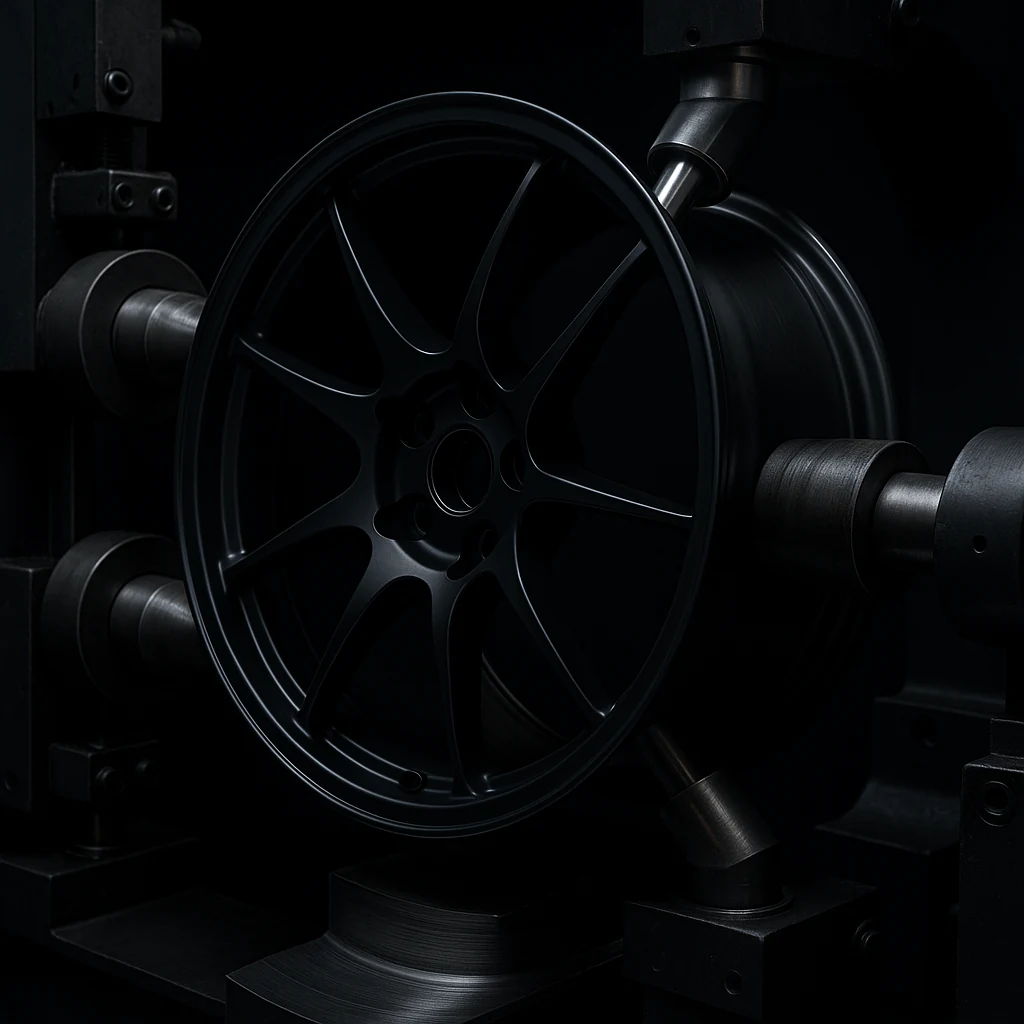
Flow forming, step by step
Flow forming shapes the barrel around an initially formed centre. The exact sequence, alloy and treatment depend on the wheel design. This is a general manufacturing overview, not the production sequence of any particular wheel.
Cast centre and blank
The centre and wheel blank are initially cast into a starting shape. The design leaves material in the barrel for the forming stages that follow.
Heated and spun
Heating and rotation prepare the blank for forming. Process conditions depend on the alloy and the intended design.
Rollers shape the barrel
Rollers stretch and compress the rotating barrel into its intended profile. Working the material under pressure produces a different balance of barrel thickness and mass.
Heat treatment
Heat treatment is selected to suit the alloy and design. Its position in the production sequence and the treatment used can vary.
Machining and finishing
Mounting faces and other critical features are machined as required, before the specified surface finish is applied. Product specifications, rather than the process name alone, determine fitment.
Forging, step by step
Forging starts from an aluminium billet rather than a near-finished wheel blank. The process combines high-pressure shaping with subsequent machining; details vary by design and project.
Aluminium billet
A billet provides the starting material. The alloy and amount of material are chosen for the intended design and application.
Pressed in stages
High-pressure shaping stages change the billet's shape and structure before the final wheel design is machined. The stages depend on the design.
Heat treatment
An appropriate heat-treatment process is used for the alloy and design. Treatment sequences are not identical for every forged wheel.
CNC machining
Computer-controlled machining produces the final spoke design and critical dimensions. Geometry and material requirements still constrain which designs and fitments are suitable.
Finishing
The agreed surface treatment and visual finish complete the design. Available finishes and custom details are discussed and confirmed for each project.
Flow Formed or Forged?
These are qualitative comparisons, not guaranteed performance differences. Diameter, width, load requirements, spoke geometry and finish can change the outcome. Use the individual product data or confirmed project specification for a purchasing decision.
| Consideration | Flow Formed | Forged |
|---|---|---|
| Process | A formed blank with a barrel shaped by rollers. | A billet shaped under pressure and machined to its final design. |
| Weight | Mass depends on the model and dimensions; compare the listed model weight. | Mass depends on the confirmed design and dimensions; forging alone does not establish a weight advantage. |
| Strength | Rollers work the barrel material under pressure; load suitability depends on the wheel's documented rating. | High-pressure shaping changes the material's structure; load suitability depends on the wheel's documented rating. |
| Design flexibility | Choose from the available model designs, sizes and finishes. | More scope to discuss a bespoke specification, subject to design and fitment review. |
| Availability at TKZ | Available models | Made to order by enquiry |
| Cost | More accessible | Premium |
Which is right for your build?
Begin with fitment and intended use. There is no single manufacturing method that is automatically the best choice for every vehicle.
Street and daily driving
Compare the specifications and cost of available Flow Formed models. Check load suitability, tyre compatibility, clearance and local road requirements before choosing.
Spirited driving and track days
Consider actual wheel mass, tyre choice, load requirements and brake clearance. Suitability depends on the individual design and intended use, not the manufacturing process name.
Show and bespoke builds
A custom Forged enquiry can make sense when your design direction or fitment is not covered by available models. The proposed design and dimensions must still be suitable for the vehicle and its use.
Choose with the whole setup in mind.
Compare the available wheel specifications or send us your vehicle details to discuss the right starting point.